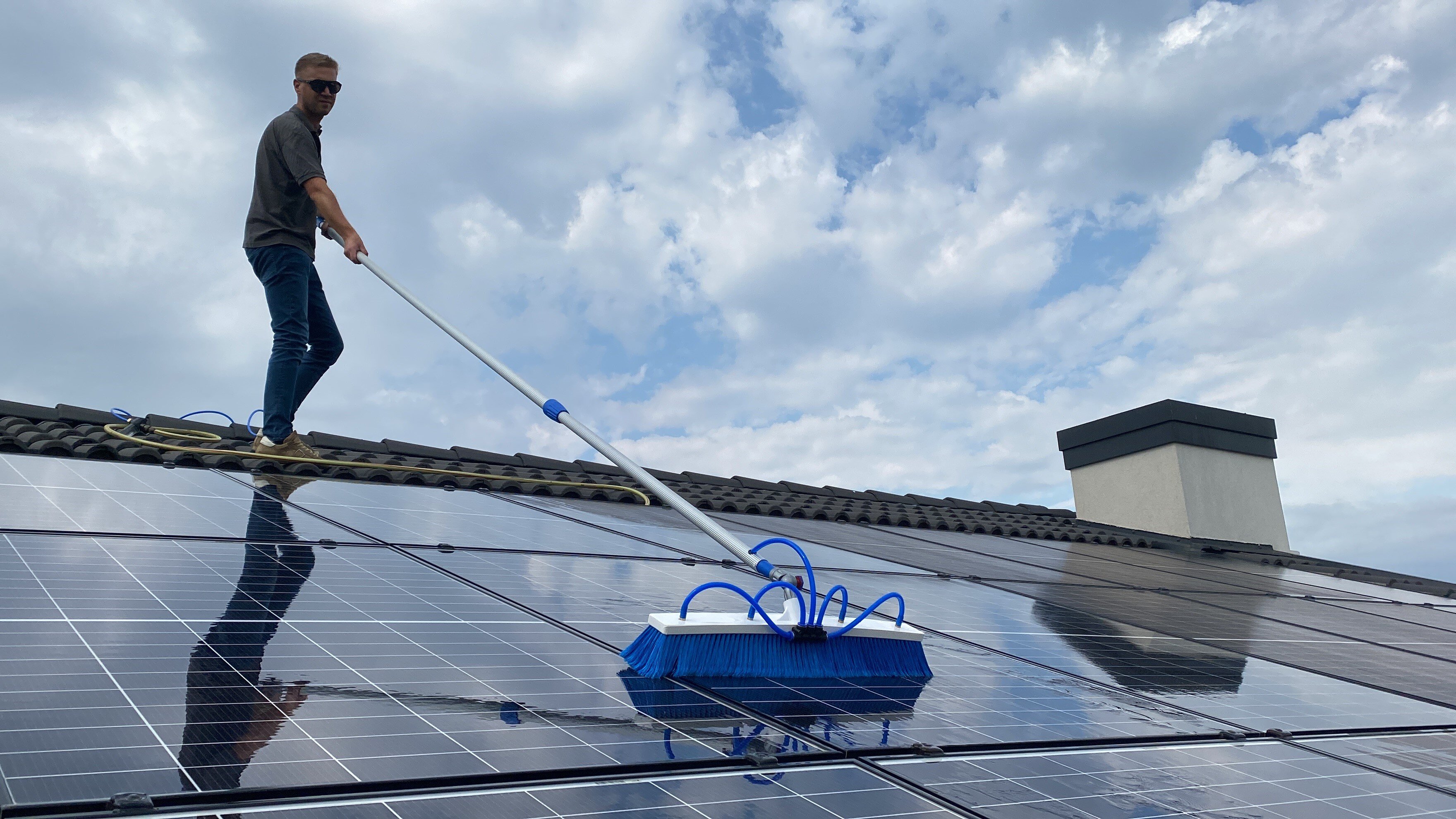








Cleaning photovoltaic panels seems like a simple task. In reality, it’s one of the most underestimated interventions and, if done incorrectly, it can compromise the system’s performance over time.
It’s not just about removing dirt: the way photovoltaic panel cleaning is carried out can affect the surface exposed to the sun, light transmission and therefore energy output.
How to clean solar panels without damaging them?
In this article we look at what really happens during cleaning, what the most common mistakes are and how to avoid them.
Why incorrect cleaning can damage panels
Photovoltaic panels are protected by high-strength tempered glass, designed to withstand weather, thermal shocks and mechanical stress. However, from a functional standpoint, their surface is far more sensitive than one might imagine if handled improperly.
During production, the glass undergoes de-ironization processes and specific optical treatments with the aim of maximizing light transmission to the photovoltaic cells. This allows sunlight to reach the active surface in the most direct and efficient way possible, reducing reflections and losses.
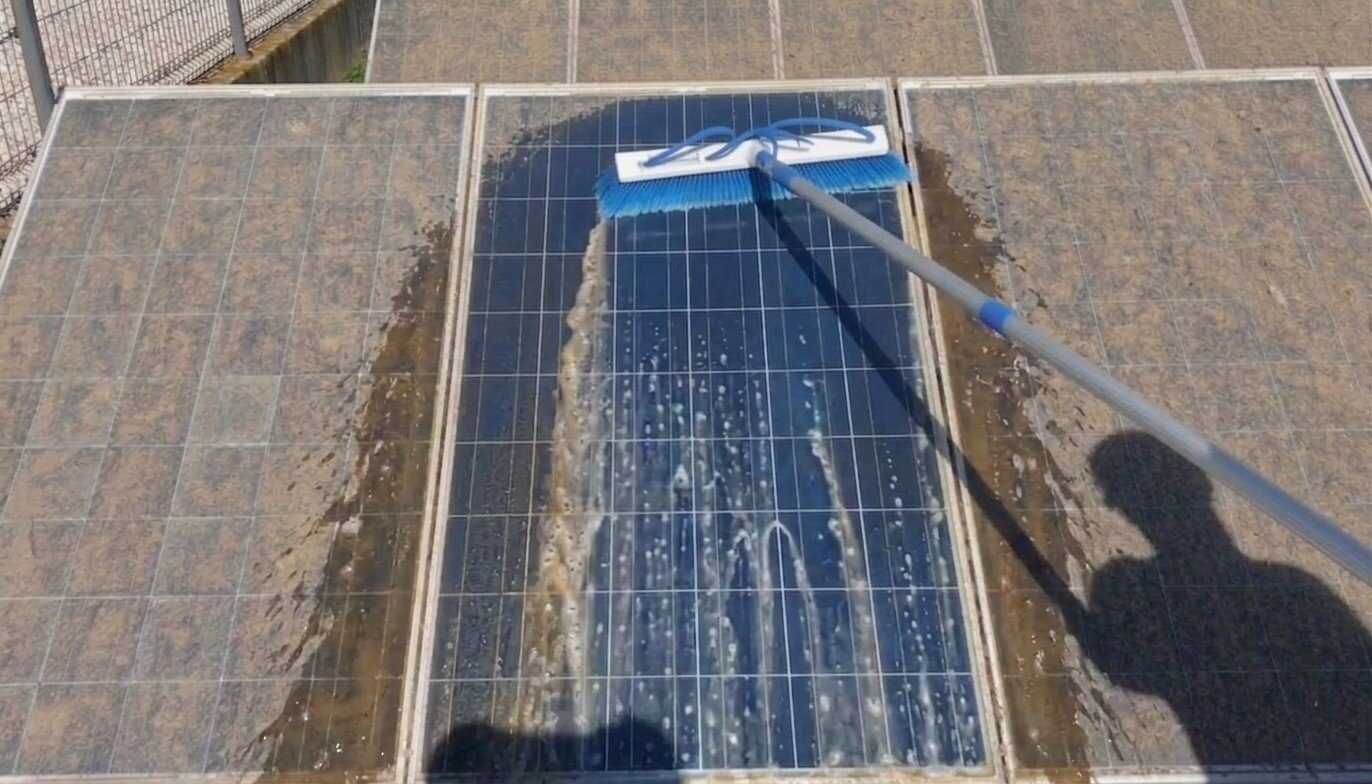
This balance, however, is extremely delicate. Any alteration of the surface – such as dirt, detergent residues or micro-scratches caused by improper cleaning – can change the behavior of light, reducing the panel’s ability to convert it into electrical energy.
In particular:
- Dirt and dust reduce the amount of solar radiation that reaches the cells
- Micro-scratches and streaks alter light diffusion, deflecting part of the rays and reducing photovoltaic output
While it is clear how important it is to keep panels clean, it is just as clear that cleaning done the wrong way can produce the opposite effects, leading to a gradual loss of efficiency.
For this very reason, it is essential to know the most common mistakes in cleaning solar panels, both in domestic and professional settings.
The considerations reported stem from the experience gained by BrillSolar in studying and developing cleaning equipment, supported by laboratory tests in the photovoltaic field and by empirical tests carried out on site in direct collaboration with industry professionals.
The most common mistakes in cleaning photovoltaic panels
1. Using unsuitable brushes
Common household brooms are not designed for delicate surfaces like photovoltaic panels. Their bristles are made to catch and hold dust and dirt during cleaning, and this behavior leads to dragging abrasive particles such as sand, soil or small debris across the surface.
The result is the formation of micro-scratches, often invisible to the naked eye, but able over time to compromise proper light transmission and therefore the panel’s efficiency.
For this reason we developed a patented polymer-bristle configuration, designed to meet the specific needs of photovoltaic panel cleaning.
These are technical fibers that, when in contact with water, soften, increasing the contact area and reducing friction on the glass. At the same time, thanks to a high-density structure, they maintain the necessary stiffness to work effectively even under the weight of the brush head and the telescopic pole.
This balance between softness and support is essential: bristles that are too stiff may scratch, while bristles that are too soft tend to collapse, losing the ability to remove more stubborn dirt.
2. Cleaning dry or with too little water
For cleaning delicate surfaces such as photovoltaic panels, it is not enough to lightly wet the surface and then brush.
Without a continuous flow of water, the removed dirt is trapped between the bristles and dragged over the glass, increasing the risk of micro-scratches.
Effective cleaning instead requires the constant presence of a thin film of water on the surface. This “cushion” reduces friction and allows dirt particles to be progressively carried away without being dragged.
It is the same principle used when washing a car’s bodywork: the continuous flow of water is not only to clean, but also to separate dirt from the surface, preventing it from being rubbed against it.
3. Using non-specific detergents
A key part of washing effectiveness depends on the detergent used, especially in the presence of persistent dirt such as smog, organic residues or atmospheric deposits.
These contaminants tend to adhere to the surface and cannot be removed effectively by mechanical action alone. A photovoltaic-panel detergent is therefore needed, able to weaken their adhesion without altering the materials.
Common household detergents may be unsuitable: some are too aggressive and risk damaging components such as aluminum frames and seals, while others leave residues on the surface, creating streaks that interfere with proper light transmission.
In particular:
- degreasers and alcohol-based products can, over time, deteriorate structural parts
- generic soaps or car detergents create surface films and streaks that alter optical performance
In the absence of a specific detergent, it is preferable to use water only, which at least allows dust and more superficial dirt to be removed without introducing further issues.
Today there are neutral-pH detergents designed for this application, formulated to work effectively even with hard water and without leaving residues. One example is the BrillSolar detergent used by professionals for photovoltaic cleaning operations.
4. Drying the panel
It is often considered necessary to dry the panels to avoid the formation of streaks. In reality, this operation, if carried out with unsuitable tools, can be counterproductive.
Using squeegees, cloths or other direct-contact tools can drag residues still present on the surface, increasing the risk of scratches.
In the absence of a demineralized water system (osmosis), it is preferable to use a specific detergent that helps prevent the formation of limescale deposits.
In addition, it is recommended to wash the panels during the coolest hours of the day, for example in the morning, so that the water can run off gradually without evaporating too quickly.
Conclusion
Cleaning photovoltaic panels is an operation as simple as it is delicate. It’s not only about removing visible dirt, but about preserving over time the optimal conditions of the surface that enables the conversion of solar energy.
As we have seen, many of the most common mistakes come from using unsuitable tools and methods. Improper brushes, lack of water, wrong detergents or incorrect procedures can progressively compromise photovoltaic output, often without the drop being immediately noticeable.
Effective cleaning is therefore not only a matter of frequency, but above all of method.
Using tools designed for cleaning solar panels, together with specific detergents and proper wash management, makes it possible to keep the system’s performance high over time.
In a system designed to last decades, even the details make the difference.
A panel must not simply be clean, but cleaned the right way.
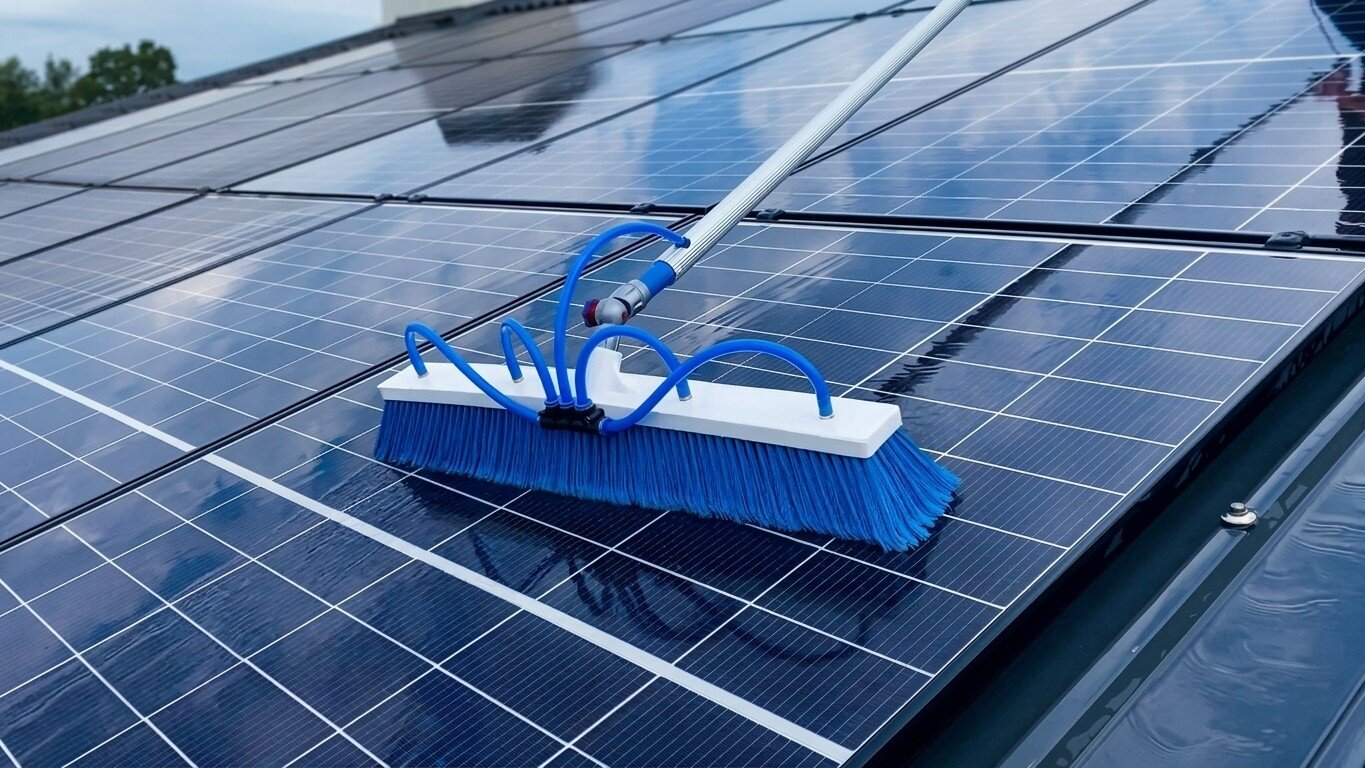
Recommended solutions for effective cleaning
To avoid the mistakes described and achieve a safe, effective result, it is important to use tools designed specifically for photovoltaic surfaces.
BrillSolar technical-bristle brush
- Fibres designed not to scratch the glass
- High-density structure to remove stuck-on dirt
- Compatible with continuous water-flow systems
FAQ – Frequently asked questions about cleaning photovoltaic panels
How can I clean photovoltaic panels without damaging them?
By using suitable brushes like this one, plenty of water and, if needed, specific cleaners with neutral pH.
Does rain clean solar panels?
No, rain only removes surface dust and often leaves residues after evaporation.
How often should photovoltaic panels be cleaned?
It depends on the environment, but generally 1–2 times a year is enough to maintain good performance.
Can I use household detergents?
No, they can leave residues or damage materials. It’s better to use specific cleaners for solar panels.
Can I use tap water?
Yes, if combined with a specific cleaner for solar panels that removes the limescale residues contained in the water.